The Market Paid for Proof
Microsoft soared, Meta fell and semiconductors snapped back. Wall Street is no longer rewarding AI spending equally—it wants the receipt.
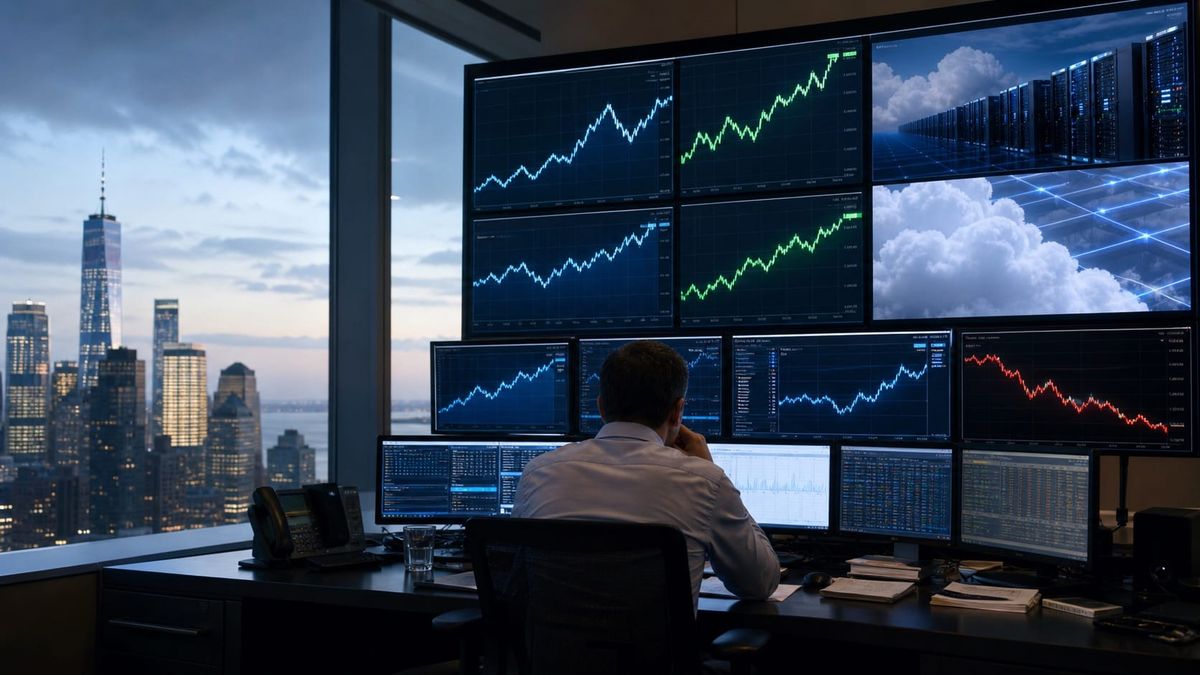
Market close, July 30, 2026. Wall Street spent Thursday putting a price on proof.
The S&P 500 rose 1.7% to 7,437.63, more than erasing Wednesday’s decline. The Dow gained 1.2% to 52,208.06. The Nasdaq surged 2.8% to 25,122.18. The Russell 2000 added 1.4% to 2,946.10. This was not a quiet relief rally. It was a verdict on which companies have earned the right to keep spending.
Microsoft gained 15.5%—its best day in nearly 18 years—after Azure accelerated and earnings exceeded expectations. Meta fell 8% after weaker profit, a higher lower bound for capital investment and too little near-term evidence that its spending will convert into comparable cloud economics. Micron rose 18.4%. Lam Research climbed 18%. AMD added 13%.
Every one of those moves came from the same debate: what is an AI dollar worth after it leaves the corporate bank account?
Microsoft crossed the burden of proof
Microsoft reported $90 billion of quarterly revenue and $35.8 billion of net income. Azure grew 43%, and annual Azure revenue surpassed $100 billion for the first time. Microsoft 365 Copilot reached more than 30 million paid seats.
The market also liked what it did not hear. Microsoft did not announce the kind of fresh spending shock investors feared. The company still spends at extraordinary scale, and cloud margins remain under pressure from infrastructure costs. But Thursday’s price action said that accelerating revenue, a deep backlog and visible paid adoption can justify a large capital program.
Meta received the opposite treatment. Its revenue exceeded expectations, but profit was hurt by legal expenses and severance, while investment guidance moved higher. That does not mean Meta’s AI strategy will fail. It means the market is demanding a shorter bridge between capital expenditure and monetization.
The semiconductor rebound was a customer read-through
Micron, Lam Research and AMD did not all release the same news today. They rallied because Microsoft supplied the missing customer evidence. Strong Azure demand and disciplined spending suggested the hyperscaler build has not stalled. After the close, Amazon added a second confirmation: AWS grew 37%, and the company raised projected 2026 capital spending to $220 billion.
This is how infrastructure cycles work. The supplier’s outlook matters, but the customer’s utilization determines whether the order book is durable. Microsoft and Amazon showed accelerating cloud consumption. The semiconductor complex responded before every purchase order was visible.
Apple complicated the celebration
Apple reported its strongest June quarter, with revenue of $109.4 billion, up 16%, and earnings of $2.02 per share. Revenue grew at a double-digit pace across iPhone, Mac and Services and in every geographic segment. Yet Apple shares fell roughly 2.3% after hours.
The initial reaction is a useful reminder: a strong quarter can still disappoint a stock carrying high expectations. Apple’s earnings also benefited by $0.11 per share from tariff refunds, a non-recurring tailwind investors should separate from the operating trend.
Friday will therefore open with a split screen. Amazon showed cloud acceleration and gained after hours. Apple showed broad consumer strength and fell. Investors will decide whether the common signal is resilient technology demand—or simply another night of company-specific repricing.
The rally had a bond-shaped hole
Equities celebrated, but long-term yields did not validate an easy-money story. The 10-year Treasury yield held at 4.67%. The 30-year rose to 5.22% from 5.20%, one day after jumping from 5.09%. The Federal Reserve kept its policy range at 3.5% to 3.75% on Wednesday, while Chair Kevin Warsh emphasized the 2% inflation goal and suggested higher market yields may already be restraining the economy.
That matters because today’s winners are long-duration businesses. Their valuations depend partly on future cash flows, and high bond yields reduce the present value of those flows. The market can reward an earnings beat in a 5%-plus long-bond world. It cannot assume every AI company will receive the same generosity.
Tomorrow’s market will ask a harder question
Today proved that earnings can overpower macro anxiety for a session. Tomorrow asks whether the evidence can broaden.
- Bull case: Amazon’s regular-session reaction confirms the after-hours move, semiconductors hold their gains, and the Employment Cost Index shows wage pressure cooling. The rally broadens beyond a handful of earnings winners.
- Base case: Strong technology results support the indexes, but high yields and oil near $87 keep leadership narrow and volatility elevated.
- Bear case: A hot wage report pushes long yields higher, Apple’s decline weighs on megacaps, and today’s semiconductor rebound is sold into before the weekend.
The lesson from Thursday is not “buy AI.” It is more selective: buy-side patience now belongs to companies that can show the receipt.
Sources
- July 30 market close, yields and company moves
- Microsoft fourth-quarter results and Azure milestone
- Meta second-quarter results and spending concerns
- Apple fiscal third-quarter results and after-hours reaction
- Amazon second-quarter results
Market levels are as of the July 30 close; Amazon and Apple reactions are after-hours and may change before Friday’s open.
Author positions: The author holds long positions in MSFT, META, MU, NVDA, AMZN and AAPL. Compensation: Neither Aria Vantage nor the author received compensation from any issuer or third party in connection with this article. This article contains analysis and opinion. It is general market commentary for informational and educational purposes, not individualized investment advice or a recommendation. Read the full disclosures.