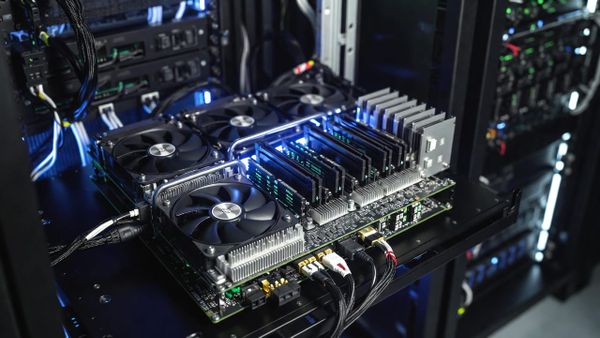
The Arsenal Behind the Arsenal
A reported Chinese air-defense deal and selective Russian support reveal the deeper contest: components, factories, minerals and energy determine endurance.
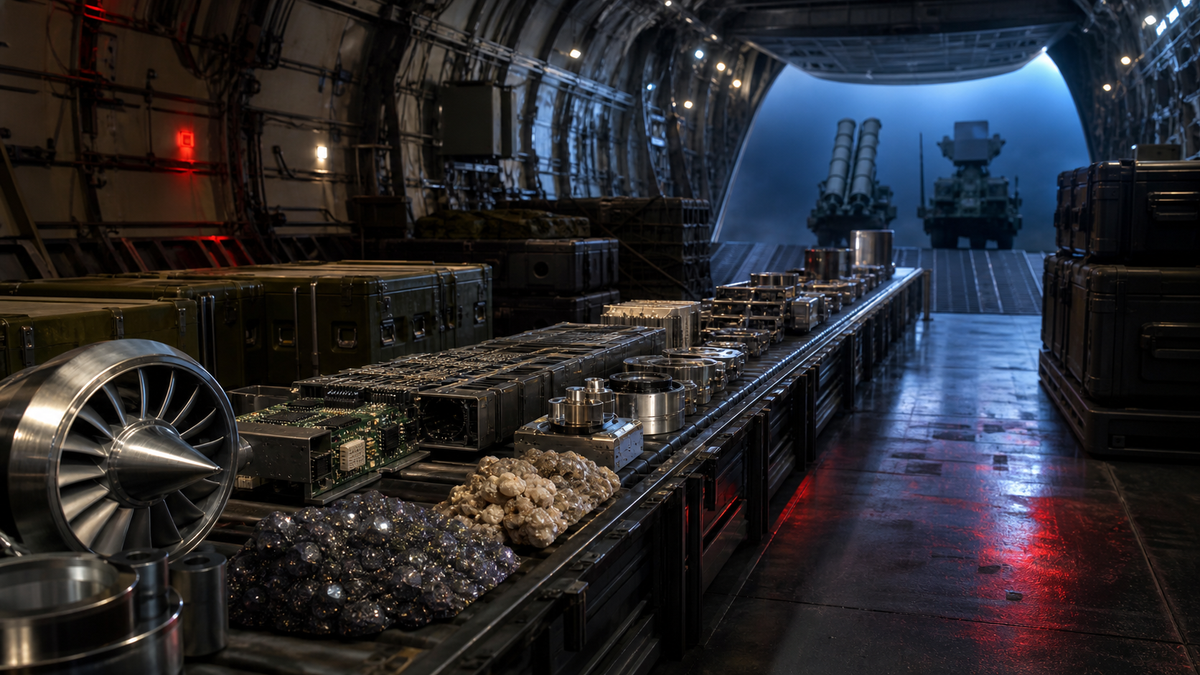
Analysis and opinion. Modern wars are fought twice: first with the weapon, then with the factory that must replace it.
Reuters reported on July 29 that Iran is expected to receive within weeks the first shipment from an order of 300 to 400 Chinese-made man-portable air-defense systems, including QW-12 and FN-16 missiles. Three unnamed sources valued the reported agreement at roughly $60 million to $70 million. China called the report “completely groundless,” Pakistan denied involvement in a proposed transit route, and Reuters cautioned that quantities, timing and delivery details could change.
That evidence does not support declaring the shipment confirmed. It does support a larger investment question: can Iran rebuild military capacity through Chinese commercial and financial channels while Russia supplies selective technical assistance—and can the United States and its allies replace the equipment they expend quickly enough to preserve deterrence?
The immediate transaction is small beside the defense budgets of the countries involved. The network behind it is not.
China sells ambiguity
China’s strategic advantage is plausible deniability. A complete weapon system can draw sanctions and diplomatic consequences. Components, machine tools, commercial electronics and intermediary payments move through a more complicated chain in which state policy, private profit and sanctions evasion are harder to separate.
This is not only a media allegation. In February 2025, the U.S. Treasury sanctioned six entities in China and Hong Kong that it said procured UAV components for Iranian suppliers. In June 2026, Treasury sanctioned another network and said Iran’s Center for Innovation and Technology Cooperation had sought weapons—including man-portable air-defense systems—from China. Those designations are U.S. government findings, not proof that the specific Reuters-reported July order will be delivered, but they establish that the procurement channel predates the latest headline.
Separate reporting cited by Iran International described Chinese suppliers marketing engines, batteries, fiber-optic cable and chips with military-drone applications to Iran and Russia. China’s Foreign Ministry said Beijing enforces dual-use export controls under its laws and international obligations.
The market implication is less dramatic than “China entered the war” and more durable: export controls, end-user verification, customs intelligence and payment surveillance are becoming part of the defense-industrial contest. If Beijing-linked networks can supply military-relevant goods while preserving access to Western markets, they capture asymmetric value. If Washington responds with broad restrictions rather than precise enforcement, U.S. companies and allies can absorb collateral costs.
Russia provides reach, not a guarantee
Russia’s role is similarly consequential and disputed. A Ukrainian intelligence assessment reviewed by Reuters said Moscow supplied satellite imagery and cyber support that could help Iran strike U.S. and regional targets. Reuters also cited Western and regional security sources who observed intensified Russian satellite activity. Iran’s ambassador to Moscow denied that Russia provided military or intelligence assistance during the conflict.
Even if the reported assistance is accurate, Moscow has stopped short of a direct military guarantee. Russia remains constrained by its own war requirements, sanctions burden and interest in avoiding a confrontation that could consume scarce equipment. The relationship is transactional: Iran supplied drones and military support to Russia; Moscow can return intelligence, technical knowledge or equipment without assuming responsibility for Iran’s survival.
That creates an important vulnerability for Tehran. Governments aligned against the United States do not automatically share the same risk tolerance. “Strategic partnership” can mean assistance up to—but not beyond—the point where Beijing or Moscow must absorb an unacceptable economic or military cost.
The American advantage has a clock attached
The United States retains formidable advantages: allied bases, high-end sensors, precision strike, advanced semiconductor design, deep capital markets, domestic energy and the ability to organize production across multiple democracies. The weakness is time. Sophisticated interceptors can be fired in minutes and take years to replace.
RTX, Lockheed Martin and Northrop Grumman ended their latest reported quarters with backlogs of approximately $289 billion, $230 billion and $104.7 billion, respectively. Those totals show durable demand. They also reveal the real constraint: rocket motors, seekers, energetics, foundry capacity, skilled labor and supplier qualification.
Investors should not confuse a larger defense budget with automatic earnings. Fixed-price contracts can punish inflation and delays. New factories require capital before they generate cash. Washington is demanding faster delivery and has criticized shareholder payouts at contractors that fail production targets. The likely winners are not simply the companies with the largest logos; they are the firms that convert appropriations into measurable output without destroying margins.
That distinction mattered on July 29. RTX, Lockheed and Northrop all fell with the broader risk-off market even as the geopolitical case for replenishment strengthened. Defense shares are not one-day war tickers. The investable cycle is capacity, delivery and backlog conversion.
The arsenal beneath the prime contractors
The supply-chain contest extends beyond missiles and aircraft. Rare earth separation, uranium conversion, specialty alloys, turbines, transformers, machine tools and construction equipment form the arsenal behind the arsenal.
MP Materials and USA Rare Earth are exposed to the effort to reduce dependence on Chinese mineral processing. Energy Fuels combines uranium exposure with an emerging rare-earth strategy. Caterpillar can benefit when factories, mines, pipelines and power systems require heavy equipment. These are strategically relevant exposures, not interchangeable investments. Mining grades, permitting, processing yields, commodity prices, subsidies and capital intensity can overwhelm a patriotic narrative.
The same discipline applies to the primes. RTX offers missile defense plus commercial aerospace. Lockheed combines tactical aircraft, missiles, space and sensors. Northrop is more concentrated in strategic deterrence, space and classified systems. Their demand drivers overlap, but their contract structures and execution risks do not.
Energy completes the triangle
China imports energy through vulnerable sea lanes. Russia depends on hydrocarbon revenue. Iran uses oil exports and opaque trading networks to fund the state despite sanctions. Energy is therefore not separate from the industrial contest; it finances it.
Exxon and Chevron provide upstream scale, refining flexibility and balance-sheet capacity when geopolitical risk lifts crude prices. Energy Transfer represents the infrastructure needed to turn North American production into usable domestic and export supply. Those companies can benefit from a sustained security premium, but diplomacy, weaker demand or a rapid reopening of shipping routes can remove that premium just as quickly.
Energy abundance gives the United States optionality. It does not make every energy stock attractive at every valuation.
What the market may be mispricing
The reported Chinese order is too small to transform the military balance by itself. MANPADS are most useful against drones, helicopters and low-flying aircraft; they do not replace a layered national air-defense network. That is the strongest counterargument to treating the report as an investable event, and it is correct.
The potential mispricing lies in repetition. A $60 million order can be tactically minor while revealing a scalable procurement route. If launchers are followed by sensors, anti-ship systems, electronics, propellant inputs or additional intermediaries, the event becomes evidence of a deeper sanctions-enforcement and production contest. Conversely, if the shipment never appears, the headline should fade rather than be incorporated into long-term earnings assumptions.
Three scenarios for investors
1. The reported transaction fails or remains unverified. Incremental equity impact should be limited. The defense thesis continues to rest on existing backlogs and replenishment, not this order. China’s denial gains weight, and investors should avoid paying for an escalation that did not occur.
2. A limited MANPADS shipment arrives. Iran improves protection against low-altitude threats, but the strategic balance changes only at the margin. The clearer market effect is political: tighter sanctions enforcement, more demand for counter-UAS systems, electronic warfare and intelligence, surveillance and reconnaissance.
3. A broader China–Iran supply pipeline emerges. Confirmed follow-on deliveries of sensors, anti-ship missiles or production equipment would be the structural case. It would strengthen the outlook for U.S. and allied missile defense, secure communications and domestic critical-mineral capacity while increasing the risk premium in shipping and energy. It could also force Washington to choose between narrower secondary sanctions and a wider trade confrontation with China.
What would prove—or break—the thesis
Investors should watch for verified physical delivery, named entities or serial evidence; new Treasury or Commerce restrictions tied to the reported intermediaries; Pentagon multiyear procurement that funds added factory capacity; contractor delivery rates rather than order announcements; and credible evidence of follow-on Chinese or Russian systems.
The thesis weakens if diplomacy holds, reported shipments fail to materialize, weapons inventories normalize, or defense contractors cannot turn demand into cash flow. It strengthens if procurement networks remain resilient under sanctions and the United States responds with funded, multiyear capacity expansion.
The investment conclusion
The favorable opportunity lies in capacity that the United States and its allies can depend on: missile defense, precision munitions, secure electronics, domestic minerals, grid equipment and integrated energy. The danger is paying any price for strategic importance.
The next decade will reward companies that turn geopolitical urgency into reliable deliveries and acceptable returns on capital. The weapon may dominate the photograph. The factory, the mine and the pipeline decide how long the advantage lasts.
Sources and freshness
- Reuters, July 29, 2026: reported Chinese MANPADS order, China’s denial and Pakistan’s denial
- U.S. Treasury, June 10, 2026: sanctions targeting Iranian weapons-procurement networks in China and Hong Kong
- U.S. Treasury, February 26, 2025: Chinese and Hong Kong entities accused of procuring UAV components for Iran
- Iran International, May 6, 2026: reporting on Chinese dual-use drone components
- Reuters, April 7, 2026: reported Russian satellite imagery and cyber support
- Iran International, April 29, 2026: debate over Russian assistance and Iran’s denial
- Lockheed Martin: second-quarter results and backlog
- Reuters: RTX outlook and backlog
- Reuters: Northrop Grumman outlook and backlog
- Associated Press: July 29 market and oil close
Research cut-off: July 29, 2026, after the U.S. market close. The reported Chinese shipment is unconfirmed and is presented with Beijing’s and Islamabad’s denials. Social and OSINT accounts were used for situational awareness, not as sole confirmation.
Author positions: The author holds long positions in LMT, RTX, NOC, XOM, CVX, MP, USAR, UUUU, CAT and ET. Compensation: Neither Aria Vantage nor the author received compensation from any issuer or third party in connection with this article. This article contains analysis and opinion. It is general market commentary for informational and educational purposes, not individualized investment advice or a recommendation. Read the full disclosures.