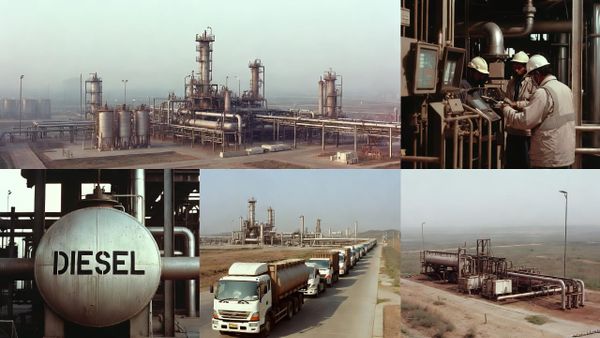
The Strait Is a Balance Sheet Now
Renewed U.S.-Iran attacks turned a shipping corridor into an instant oil, defense and credibility premium. America’s advantage is optionality.
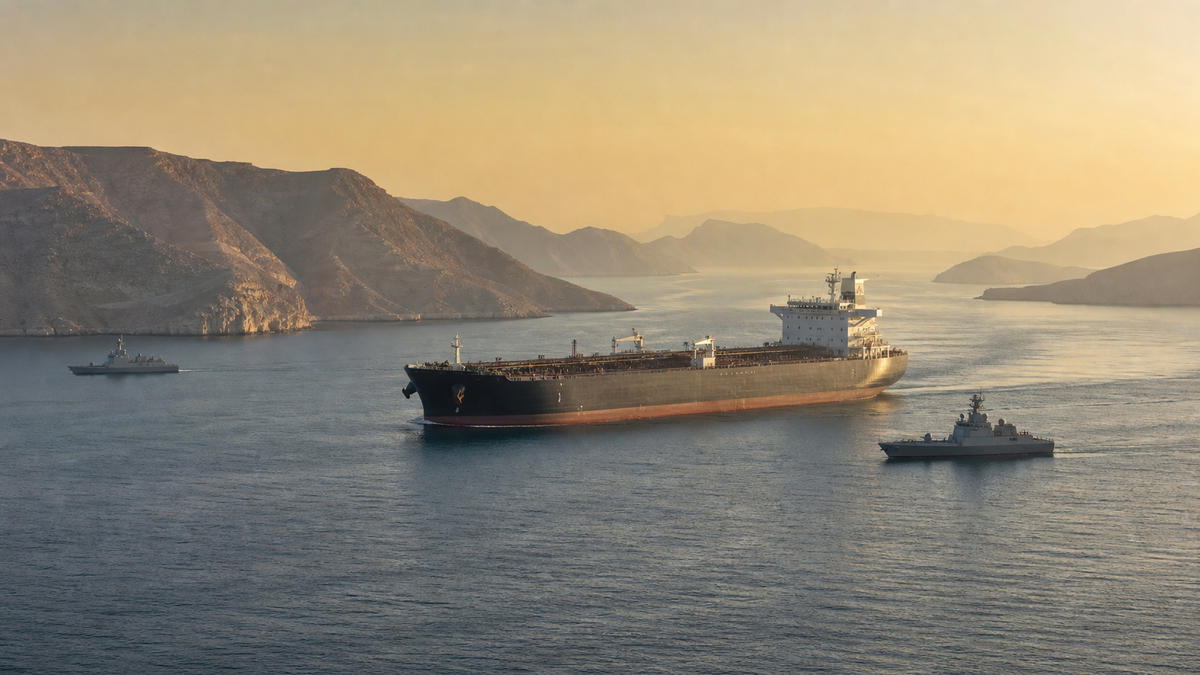
Analysis and opinion. The Strait of Hormuz is no longer just a line on a map. It is a moving entry on the world’s balance sheet.
Renewed fighting between the United States and Iran sent Brent crude 7.3% higher on July 29. Iran launched ballistic missiles toward the U.S.-operated Muwaffaq Salti Air Base in Jordan; Jordan said it intercepted five missiles in the latest barrage, with no immediate casualties or damage reported from that specific attack. U.S. and Saudi forces struck Iran-aligned logistics and weapons sites in eastern Iraq after more than 30 IRGC-directed drone attacks over 72 hours, according to U.S. Central Command. Iraq’s Popular Mobilization Forces said 20 people were killed and 32 wounded in those strikes.
Each number requires attribution because information warfare accompanies physical warfare. The market does not wait for perfect visibility. It reprices routes, inventories and deterrence in real time.
America’s advantage is optionality
Before the war, roughly 15 million barrels of oil per day traveled through Hormuz. The Islamic Republic can threaten that traffic, but doing so also threatens the revenue of regional states and the economic lifelines on which Iran itself depends. The United States enters the confrontation with strategic depth: domestic oil production, integrated energy majors, allied bases, carrier aviation, long-range strike and a financial system capable of coordinating sanctions.
That does not make escalation costless. American service members have already been killed in earlier Iranian attacks during this conflict, and every new exchange risks miscalculation. It does mean Washington has more levers than Tehran. The strongest U.S. strategy is one that protects shipping, preserves allied cohesion and imposes costs on the IRGC without confusing the Iranian people with the regime that rules them.
Israel’s role is similarly grounded in deterrence. A state facing sustained missile and drone attacks cannot outsource its survival. Yet interceptor stocks are finite, and even successful defense has an economic cost. The pro-American, pro-Israeli case is strongest when it is paired with restraint, verified objectives and protection for civilians—not when it treats escalation as its own achievement.
The investable constraint is replenishment
RTX, Lockheed Martin and Northrop Grumman stand behind different layers of the deterrence architecture: air and missile defense, strike systems, sensors, space and strategic platforms. Their combined backlogs now approach two-thirds of a trillion dollars. The opportunity is not that one week of conflict instantly transforms revenue. It is that allies have discovered how quickly interceptors and precision munitions can be consumed, while production lines require long-lead components, trained labor and stable multiyear funding.
RTX’s $289 billion backlog, Lockheed’s record $230 billion and Northrop’s $104.7 billion provide visibility. They also create obligations. Governments will demand faster output and better pricing; President Trump’s proposed $1.5 trillion fiscal 2027 defense budget comes alongside criticism of contractor speed and shareholder distributions. Capacity, not rhetoric, will determine the winner.
Energy security is national security
Exxon and Chevron rose more than 2% today as crude prices jumped. Their value in this environment is broader than a directional oil bet. Integrated production, refining, trading and global logistics give them ways to respond when one route becomes impaired. U.S. energy abundance also gives policymakers more freedom to confront aggression without placing the entire domestic economy at the mercy of imported barrels.
Higher oil is not an unqualified gift. It can reduce demand, raise costs, disrupt liftings and provoke political pressure over gasoline. A rapid diplomatic reopening of the Strait would erase part of the premium. The favorable case for XOM and CVX rests on durable assets and cash generation, not an assumption of permanent war.
A corridor tests credibility
The Islamic Republic has often used proxies, deniable supply chains and chokepoints to compensate for weaker conventional power. The current crisis tests whether that model still works against a coordinated U.S.-Israeli and regional response. If shipping remains protected and proxy infrastructure is degraded, deterrence strengthens. If attacks repeatedly impose economic costs without consequence, the opposite occurs.
For markets, the Strait now carries two prices: the physical price of moving oil and the political price of credibility. Defense and energy companies sit at the intersection. Investors should approach them as long-cycle industrial assets with policy and execution risk—not as souvenirs from a headline.
Sources and verification note
- Renewed U.S.-Iran attacks and Jordan interceptions
- Regional strikes and attributed casualty reports
- Reuters live reporting on the Iran conflict
- Reuters: Hormuz traffic and security risk
- U.S. Central Command public account
Methodology: Official statements and established reporting were used for factual claims. Fast-moving OSINT and social-media feeds were monitored for leads, but unverified footage and anonymous claims were not treated as confirmed evidence.
Author positions: The author holds long positions in RTX, LMT, NOC, XOM and CVX. Compensation: Neither Aria Vantage nor the author received compensation from any issuer or third party in connection with this article. This article contains analysis and opinion. It is general market commentary for informational and educational purposes, not individualized investment advice or a recommendation. Read the full disclosures.