The Arsenal-and-Barrel Trade Returns
Oil repriced the Strait in one session. Defense backlogs reveal the longer cycle: a world that can expend munitions faster than it can replace them.
Markets dislike war, but they price its bottlenecks with ruthless speed.
Renewed U.S.-Iran hostilities sent Brent crude 7.3% higher to $88.09 a barrel on July 29. Exxon gained 2.4% and Chevron rose 2.3% while the broad market fell sharply. Defense shares moved lower with the risk-off tape—RTX lost 1.5%, Lockheed Martin 2.1% and Northrop Grumman 2.6%—but their underlying order books tell a different story. The short-term trade is oil. The multi-year industrial question is replenishment.
The Strait adds a geopolitical premium to every barrel
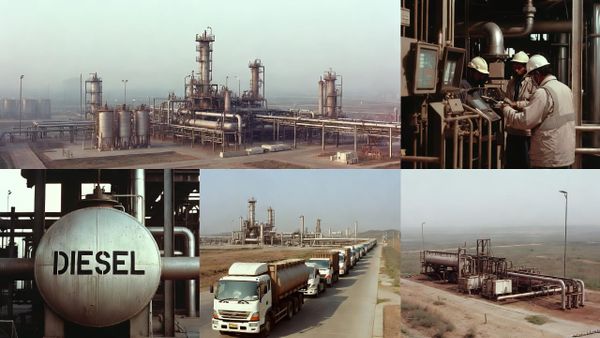
The Strait of Hormuz remains one of the world’s most consequential shipping corridors. Roughly 15 million barrels of oil per day moved through it before the war, according to reporting compiled by the Associated Press. Renewed missile and drone attacks do not need to close the waterway completely to matter. Slower transits, higher insurance, rerouting and precautionary inventories can all raise the marginal cost of energy.
For Exxon and Chevron, higher benchmark prices can lift upstream realizations and refining economics. Reuters reported that Exxon’s market-driven indicators pointed to roughly a $5 billion sequential earnings benefit for the second quarter from stronger oil and refining conditions. Both companies report on July 31, when investors will learn how much of the price windfall survived operational disruption and cost inflation.
The risk is that investors treat every geopolitical spike as permanent. A ceasefire, secure transit or demand slowdown could rapidly remove the premium. Prolonged high gasoline prices also invite political pressure. Integrated majors have an advantage because upstream gains, refining capacity, trading, chemicals and balance-sheet strength provide more flexibility than a simple spot-oil bet.
Defense is an inventory problem disguised as a budget story
The United States has used more than 50,000 rockets, missiles and rocket-propelled projectiles across support for Ukraine and the conflict with Iran since 2022, according to Pentagon figures reported by Reuters. That consumption exposes the investable constraint: sophisticated weapons can be fired in minutes and take years to replace.
Lockheed Martin finished its latest quarter with a record $230 billion backlog after booking $65 billion of new orders. RTX raised its 2026 outlook and reported a $289 billion backlog, including $119 billion in defense. Northrop Grumman lifted its full-year forecasts while backlog reached $104.7 billion. Those numbers are not speculative war headlines; they are contracted work flowing through factories with limited surge capacity.
President Trump has proposed a $1.5 trillion defense budget for fiscal 2027, far above the 2026 level. Congress will decide the final number, and the administration has also criticized contractors over production speed, cost and shareholder payouts. More spending can therefore arrive with tougher contract terms. The winners will be the companies that convert appropriations into deliveries, not merely press releases.
Three different exposures
RTX combines missile-defense demand with a large commercial aerospace franchise. Lockheed is the broad platform-and-munitions prime, with the F-35, missiles and space programs. Northrop offers strategic deterrence, space, sensors and the B-21. They share a favorable demand environment but not identical execution risk.
Exxon and Chevron sit on the other side of the same security ledger. The U.S. shale system and integrated majors reduce America’s vulnerability to imported energy shocks, while allied militaries protect the routes that keep global prices from becoming unmoored. Energy abundance and defense capacity are complementary forms of deterrence.
The opportunity is favorable because the world is discovering that inventories, refining capacity and trained labor cannot be summoned on demand. The ethical point should remain clear: civilian suffering is not an investment thesis. The market thesis is that years of underinvestment in resilience now require years of rebuilding.
Sources
- July 29 market and oil close
- Reuters: Strait of Hormuz traffic and security risk
- Lockheed Martin second-quarter results
- Reuters: RTX outlook and backlog
- Reuters: Northrop Grumman outlook and backlog
- Reuters: Exxon earnings indicators
Author positions: The author holds long positions in RTX, LMT, NOC, XOM and CVX. Compensation: Neither Aria Vantage nor the author received compensation from any issuer or third party in connection with this article. This is general market commentary for informational and educational purposes, not individualized investment advice or a recommendation. Prices and estimates are as of the July 29, 2026 close unless otherwise stated. Read the full disclosures.